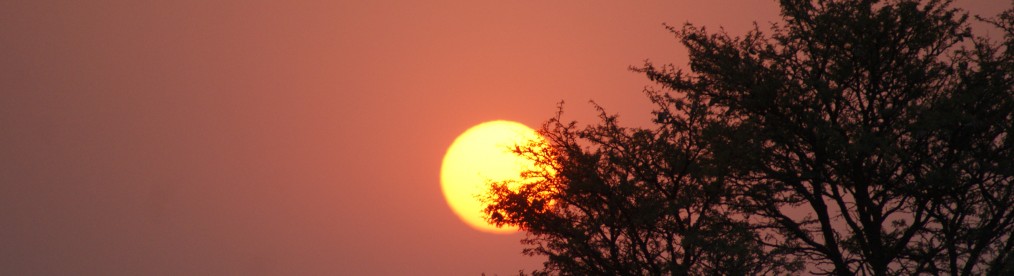
“RED” – CHARLES WOODROOFFE OULD

I can find no information about the poet Charles Woodrooffe Ould other than the fact that he was born in Grahamstown and was educated here before becoming a journalist and moving to England. I have no idea when he wrote the poem, Red, yet it resonates very strongly with me. My English aunt used to comment that South Africa was a ‘harsh’ country replete with thorns, hard brown soil and brilliantly coloured flowers. Even though she tended to visit my father during our winters, she found the sun bright and hot. I couldn’t appreciate this view until I was able to visit her in her delightful cottage in Dorset.

Our wild flowers tend to be vibrant: scarlet, bright orange, yellow, purple … although there are some fairly soft pinks, powder blues and even white ones. Our winters are the time to see beautiful aloes

and the spiky scarlet flowers of the Erythrina trees.

Poinsettias here grow into large trees. Although also not indigenous to this country, hibiscus flowers are popular garden trees or even hedges – especially in older gardens – for they do well in this arid part of the world. Charles Oud would have grown up with these flowers as a part of his early landscape:

RED

Hibiscus was red,

(It grew by the window),

And salvia,

Poinsettia,

The spikes of aloes,

And the Kaffirboom*

In flaring splendour.

Here there are flowers,

Frail lives of loveliest name,

Daffodils, primroses, daisies,

Fritillaries, buttercups,

But nowhere in England

That pagan colour,

Nowhere that red

That flamed at the window.

These trees are now called Coral Trees or collectively as Erythrina trees.

These words convey to me a longing for the bright, ‘pagan’ (as in untamed, wild) colours of South Africa. The flowers with the ‘loveliest name’ – all familiar in England – he describes as having ‘frail lives’ as they are unlikely to survive in the harsh environmental conditions he once experienced in the Eastern Cape. He longs for the red of the hibiscus ‘that flamed at the window’ (not indigenous) that epitomises the other strong reds he mentions.

Heimwee, or longing, can take many forms. During the nearly three months I spent in England decades ago, I began to tire of green fields, neatly trimmed hedges and the undoubted beauty of cottage gardens. Instead, I felt a deep welling of a desire to see brown grass and long thorns on trees. Ould missed the vibrancy of colour … other people miss the harsh calls of Hadeda Ibises in the mornings. Even though I left the then Eastern Transvaal when I was seventeen, I still miss the particular scent of the Lowveld region … longing can take many forms.

WARMING WINTER ALOES

As our temperatures plummet it is heartwarming to see ever more aloes coming into bloom:

This is a self-sown aloe blooming in my garden for the first time in about three years. The fleshy leaves on the left of the photograph are from a Crassula ovata or Jade Plant.

Here an aloe is being visited by a Greater Double-collared Sunbird. This one is growing near our back gate.

This Aloe ferox grows in our front garden. The yellowish leaves on the top left belong to the Cape Chestnut tree at the top of our front path that leads to the gate.

This is the time when the Aloe striata come into bloom all over the veld and in gardens. These particular ones decorate the garden at the Nanaga Farm Stall between the N2 and the N10.

THE START OF ALOE TIME

The sun has lost its heat, although is still pleasant to sit in for a while if the wind is not blowing. The nights are becoming uncomfortably chilly; the days are mostly glorious clear, bright and crisp. What makes us look forward to the start of the winter is the blooming of the aloes. These are the first ones to come out near our back gate:

Within days of more sunshine, even more blooms pushed up between those tightly whorled leaves:

The aloes growing next to the pool have come out too – visited by butterflies and ants mostly.

Once these closed bud have opened – give them a day or two – then we should begin to see bees, and sunbirds visiting them:

MAY OVER FIVE YEARS

I got this idea when my phone popped up with a picture taken at the end of May four years ago. It was this one:

It shows the newly developed pool garden, once I had cut away swathes of the encroaching jungle. As one of the few sunny spots in the garden, it proved to be a fine place for planting annuals … except, with a drought on and water restrictions in place, this became a difficult plan to literally ‘keep alive’. Since then, the daisy bushes have grown, I have planted indigenous pelargoniums which have taken over a large section – and the jungle is encroaching once more! Once my knee is strong enough for me to return to gardening, a lot of weeding and pruning is going to take place. A year later, in 2022, I photographed the first of many aloes coming into bloom all around our garden at the start of winter:

I was admiring them today as I watched them already being visited by ants, bees, tiny butterflies and even a few bees – there will be many more of them once the buds open. In May 2023 we spent a few days in the Mountain Zebra National Park with my brother and his wife. There may have been aloes and animals galore, but an abiding memory is of how very cold it was in the early mornings – witness the frost on this wooden fence post in the rest camp:

We must have travelled to and from Port Elizabeth for some reason at the end of May last year. This pair of white ducks provided some amusement while we enjoyed a pie and something to drink at the Nanaga Farm Stall:

This year? It has been icy indoors and so we decided to lunch outside next to our pool, where we could soak up some warmth from the sun, admire the aloes and watch the birds. Evidence of the strong Berg Wind which blew yesterday is the myriad leaves and a thick layer of dust floating on the surface of the pool:

That’s the trouble with being at home: there are always reminders of tasks that need to be seen to!